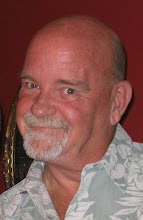
My favorite annual entertainment awards show, the Tonys celebrate the best of the year's performances on Broadway. Yep, a totally New York thing. And I love it. OK, I'm a Theater Queen - no denying it.
[In all of these, click on the "YouTube" logo to see it slightly larger (once you get there, click on the double-headed, right-angle arrow in the lower right of the screen to "expand") or click on the box with four arrows pointing to the corners on here to show it full screen - if you have the bandwidth and the resolution for it.]
This year's show had to be the gayest television presentation this side of the Logo network. It starts with Neil Patrick Harris (yes, he's openly gay), who's hosting again this year, along with dance companies from most of the nominated Musicals, singing "It's Not Just For Gays Anymore" (Broadway, that is) as the opening segment of the show:
Then, do you like tap-dancing sailors in tight pants? Check out the guys in the chorus (especially the one just to our right (stage left) of Sutton in most of this once the full chorus comes on - my personal fave) in this performance of the title number from "Anything Goes," which won Best Revival and features Sutton Foster (the new Ethel Mermon, in my book), who won Best Performance by an Actress in a Leading Role in a Musical. These guys are hot:
So, then Hugh Jackson, who has hosted the show in the past, comes out and gives Neil Patrick Harris some crap about how he (Hugh)'s a better host. They wind up singing and dancing a medley of show tunes, including "Baby if I'm the Bottom, you're the Top" and waltzing around the stage with each other. Pretty campy:
Finally, not technically in the that's-so-gay category, but my favorite performance from the show, is this "I Believe" from "The Book of Mormon" - the huge hit brought to us by the creators of TV's "South Park." It wound up winning nine Tonys including Best Musical, as expected. This kid, Andrew Rannells (who was nominated for Best Performance by an Actor in a Leading Role in a Musical, but didn't get it), totally captures the youthful exuberance and blind faith so typical of the Mormon Missionary experience (and I've definitely known a few of those who've later gone gay). I can't stop watching/listening to this - I love it!
Can't wait to get to New York to see that! Well, and maybe the sailors, too.
Broadway may not be just for Gays anymore, but it's definitely still for this one.
Sunday, June 19, 2011


Saturday, January 8, 2011
Sermon for the Ordination of Priests
Ordination of Priests
St. John’s Cathedral, Los Angeles
8 January 2011
Canon James Blair White
Help us, O Lord to be masters of ourselves
that we may become the servants of others.
Take our lips and speak through them,
our minds and think through them,
and take our hears and set them on fire,
for Christ’s sake. Amen.
So, what is a lay person doing up here in the pulpit at this festival of ordained people? It’s a good question. And I don’t think I have an answer. I’m evidently here by virtue of the fact that I am one of the co-chairs of the Commission on Ministry. Well, that and the fact that Bishop Bruno told me he wanted me to preach. Thank you for this opportunity, Bishop. And thanks, too, to the Deans for sharing this historic pulpit.
Since I don’t have a formal theological education and know nothing, really, about homiletics or exegesis – other than what I’ve experienced from where you are – I’m going on the assumption that I should be preaching from my experience, rather than attempting to dazzle you with intellectual delights. So this, obviously, is going to be a lay person’s perspective on this event and some of the process that leads up to it.
I’ve been a member of the Commission on Ministry for more than a dozen years – and chair or co-chair for a good part of that. For those of you who may not speak Church, the Commission on Ministry is a Diocesan committee that is mandated by the Canons (the laws) of The Episcopal Church to (and I’m quoting here from Title III of those Canons) “to assist the Bishop in the design and oversight of the ongoing process for recruitment, discernment, formation for ministry, and assessment of readiness therefore.”
So we have the responsibility, among other things, to advise and make recommendations to the Bishop on persons who come to us aspiring to a ministry as an ordained person. (I should say that in all of these things, the ultimate decisions are the Bishop’s and we only make recommendations. The Bishop usually agrees with us, but that’s not always a given.) We call our initial interview process “the Formation Retreat” and we hold two of those a year and see 10 or 12 people at each one. I had never really done the math before, but when I got to thinking about this, it became clear to me – and I have to admit, something of a surprise – that over those dozen years, I’ve probably interviewed, or at least met and read the applications of, a couple of hundred of these Nominees, as they’re called. It is always a privilege and an honor to hear these people’s stories and have a chance to get to know them a little and to try to hear the call to a vocation that they are hearing. Our process is one that invokes the Holy Spirit often during our deliberations and we pray regularly that we are hearing what ministry it is that God is calling each person to. We know that we are asking these people to share with us the deepest, and sometimes the most private parts of their lives and we always try to receive that in the most gracious way possible.
As you might imagine, there has been a broad swath of the church that has appeared before us. Some of those people have been hearing this call since they were children. One of my favorite of those stories is about a guy who, at about age 9 or 10, lined up all of his G.I. Joes in front of him, used a Kleenex box for an altar, and celebrated the Eucharist for his platoon. (We’ve had girls doing the same thing with dolls, too.) And yet others come to us after long and successful careers in something totally un-churchy and yet have found those careers unfulfilling and have finally figured out that they’ve been hearing God calling them to something totally new and different – in many ways. A guy who retired from the Army as a Colonel, then ran a major I.T. organization, and now has become one of the loveliest priests I know; and recently a woman who had a very successful career in Silicon Valley – and she said to me, “Well, Steve Jobs really liked what I was doing and the work was so easy for me – and after some time it all became so meaningless.”
And the ways that those people hear that call come in a wide variety, too. A few talk about having had a dramatic experience where they hear a big voice or the room is filled with light or something along those lines. Those always make me a little bit nervous, but only because I don’t have that kind of revelation from God in my own experience – and so I try to understand and respect it. But the ones that I am more comfortable with are those that speak of having been sort of surprised that people around them have been nudging them – “Have you ever thought about being a priest?” or “You really should think about a vocation in the church.” At first it takes them by surprise, but as they continue to hear it from more and more people, it begins to sink in that God may be calling them to something new. I guess the reason I’m more comfortable with this style of revelation is because I have always heard messages from God in the voices of other people – sometimes from the pulpit, but more often just in a conversation. And, of course, being a little bit slow, I don’t usually realize it until some time after the fact – and I think back, “Oh, wow – God was really in that conversation.”
So, I think that’s part of our responsibility as members of a faith community – to identify, encourage and lift up new leaders for the church. It’s really Stewardship at the heart of it – caring for the future of our church – and for the bringing about of God’s Kingdom. Part of our work that we do for the church needs to be urging those we think would be good ordained leaders to think about following that path. And, I have to add, on the flip side, cautioning those who think they might be called when we don’t hear or see it ourselves. Honesty is tough, but it’s definitely necessary here.
We often talk about “discernment” as being work that the one who is hearing the call is supposed to do. But I believe we are all supposed to be discerning not only our own vocations – and for most of us that means discerning where our lay ministry is headed – but I think we should also be helping discern others who may be called to an ordained ministry – and helping them hear that call.
And along those lines, I am really interested in getting young people to think about a future vocation – or at least getting them to begin to think about it as a possibility. Is there a kid in your congregation who is an acolyte or a choir member who seems to have an attraction to the liturgy – or scripture or prayer or whatever – one who really seems to get it – more than those around her or him? Let’s get that kid thinking! Several years ago, a couple of the younger priests on the Commission on Ministry put together a day of exploration for young people who might have such an attraction. They spent that time talking about what the life of a priest is about and answering questions and putting on skits and just generally getting those kids to think about what it might be like to become a priest. We got about 50 high school and college-aged young people to come to that event. I would really like to get that to happen again – and there are a couple of you that I’m thinking of in particular to help me make that happen. If anyone is interested in working on that, please talk to me – you don’t have to be a member of the COM. It’s very rare that we see someone identify – or even hear the rumblings of – a call early in life these days – and, particularly, to head off to seminary directly after getting a bachelor’s degree. Yet 30 years ago, that was standard operating procedure. How have we changed the way we do this work of discernment? The church went through a period some years ago where it told younger people that they “needed more life experience” before thinking about ordination. I’m not so convinced that is true. Maybe a year or two of something like the Urban Interns program after college and then seminary. I think we need to look at all of that.
Now in a few minutes this panoply of presbyters will gather around these ordinands and the Bishop will lay hands on them and something mysterious and wonderful will happen. I want to encourage all of you lay folks to be participants in this – not just observers. You are just as capable of summoning the Holy Spirit’s presence here today as anyone. I know many of we Episcopalians are pretty cautious about getting physical in our worship. But when the time comes for the Bishop to say the words: “Make her a priest in your church,” it has become my habit to raise my hand and send my blessing on them, too. I encourage you to do the same. And a hearty “Amen” is appropriate, too.
So, now, this assignment didn’t come with an instruction manual, but at every ordination I’ve ever been to, the preacher always has the ordinands stand and gives them a charge. So I don’t want you to be cheated just because you drew a preacher who didn’t know what he was doing. So, Ordinands, will you now stand?
I don’t know if you know it, but the Commission on Ministry publishes several documents that describe what it is we’re looking for in people called to ordained ministry – and I mean pages and pages. And while I’ve been part of developing some of that material, there are really only three things that I look for.
First, does this person have an infectious love of Jesus? You may have been hearing for some time now that it’s all about the sacraments – or the liturgy, or preaching or pastoral care or whatever. And, yes, all of those things are important. But in the end, it’s all about Jesus. George Regas – by the way, whose sermon prayer I used to begin here today – thank you, George – anyway, George once told me that a preacher can’t preach about the transforming power of God’s love if that person hasn’t been transformed by it her (or him) self. So, tell us your story. Help us get to know the God who has changed you. Help us to be changed ourselves. Bring more people to that love.
Secondly, is this a person who can gather a community? Some of that is about inborn charisma, but much of it is about making your community of faith a place that people want to be a part of. Develop your skills as a speaker and teacher and friend – and help the people with whose care you have been entrusted to develop an attractiveness, too. Teach graciousness, hospitality and friendliness – and teach it by being it yourself.
Finally, I ask, will this person be an example of a holy life? Even though we know that God’s love is given freely and unconditionally, most of us think that we’re supposed to be doing more – maybe not so much to earn it, but at least to be holding up our end of the relationship. So we need you to show us how to do that. Teach us to pray. Teach us to give. Teach us to see Jesus in everyone we encounter. And teach us to help bring about God’s kingdom on earth, as it is in heaven.
Do all these things and the church – and the world – will be blessed by your ministry. God bless you.
Amen.
St. John’s Cathedral, Los Angeles
8 January 2011
Canon James Blair White
Help us, O Lord to be masters of ourselves
that we may become the servants of others.
Take our lips and speak through them,
our minds and think through them,
and take our hears and set them on fire,
for Christ’s sake. Amen.
So, what is a lay person doing up here in the pulpit at this festival of ordained people? It’s a good question. And I don’t think I have an answer. I’m evidently here by virtue of the fact that I am one of the co-chairs of the Commission on Ministry. Well, that and the fact that Bishop Bruno told me he wanted me to preach. Thank you for this opportunity, Bishop. And thanks, too, to the Deans for sharing this historic pulpit.
Since I don’t have a formal theological education and know nothing, really, about homiletics or exegesis – other than what I’ve experienced from where you are – I’m going on the assumption that I should be preaching from my experience, rather than attempting to dazzle you with intellectual delights. So this, obviously, is going to be a lay person’s perspective on this event and some of the process that leads up to it.
I’ve been a member of the Commission on Ministry for more than a dozen years – and chair or co-chair for a good part of that. For those of you who may not speak Church, the Commission on Ministry is a Diocesan committee that is mandated by the Canons (the laws) of The Episcopal Church to (and I’m quoting here from Title III of those Canons) “to assist the Bishop in the design and oversight of the ongoing process for recruitment, discernment, formation for ministry, and assessment of readiness therefore.”
So we have the responsibility, among other things, to advise and make recommendations to the Bishop on persons who come to us aspiring to a ministry as an ordained person. (I should say that in all of these things, the ultimate decisions are the Bishop’s and we only make recommendations. The Bishop usually agrees with us, but that’s not always a given.) We call our initial interview process “the Formation Retreat” and we hold two of those a year and see 10 or 12 people at each one. I had never really done the math before, but when I got to thinking about this, it became clear to me – and I have to admit, something of a surprise – that over those dozen years, I’ve probably interviewed, or at least met and read the applications of, a couple of hundred of these Nominees, as they’re called. It is always a privilege and an honor to hear these people’s stories and have a chance to get to know them a little and to try to hear the call to a vocation that they are hearing. Our process is one that invokes the Holy Spirit often during our deliberations and we pray regularly that we are hearing what ministry it is that God is calling each person to. We know that we are asking these people to share with us the deepest, and sometimes the most private parts of their lives and we always try to receive that in the most gracious way possible.
As you might imagine, there has been a broad swath of the church that has appeared before us. Some of those people have been hearing this call since they were children. One of my favorite of those stories is about a guy who, at about age 9 or 10, lined up all of his G.I. Joes in front of him, used a Kleenex box for an altar, and celebrated the Eucharist for his platoon. (We’ve had girls doing the same thing with dolls, too.) And yet others come to us after long and successful careers in something totally un-churchy and yet have found those careers unfulfilling and have finally figured out that they’ve been hearing God calling them to something totally new and different – in many ways. A guy who retired from the Army as a Colonel, then ran a major I.T. organization, and now has become one of the loveliest priests I know; and recently a woman who had a very successful career in Silicon Valley – and she said to me, “Well, Steve Jobs really liked what I was doing and the work was so easy for me – and after some time it all became so meaningless.”
And the ways that those people hear that call come in a wide variety, too. A few talk about having had a dramatic experience where they hear a big voice or the room is filled with light or something along those lines. Those always make me a little bit nervous, but only because I don’t have that kind of revelation from God in my own experience – and so I try to understand and respect it. But the ones that I am more comfortable with are those that speak of having been sort of surprised that people around them have been nudging them – “Have you ever thought about being a priest?” or “You really should think about a vocation in the church.” At first it takes them by surprise, but as they continue to hear it from more and more people, it begins to sink in that God may be calling them to something new. I guess the reason I’m more comfortable with this style of revelation is because I have always heard messages from God in the voices of other people – sometimes from the pulpit, but more often just in a conversation. And, of course, being a little bit slow, I don’t usually realize it until some time after the fact – and I think back, “Oh, wow – God was really in that conversation.”
So, I think that’s part of our responsibility as members of a faith community – to identify, encourage and lift up new leaders for the church. It’s really Stewardship at the heart of it – caring for the future of our church – and for the bringing about of God’s Kingdom. Part of our work that we do for the church needs to be urging those we think would be good ordained leaders to think about following that path. And, I have to add, on the flip side, cautioning those who think they might be called when we don’t hear or see it ourselves. Honesty is tough, but it’s definitely necessary here.
We often talk about “discernment” as being work that the one who is hearing the call is supposed to do. But I believe we are all supposed to be discerning not only our own vocations – and for most of us that means discerning where our lay ministry is headed – but I think we should also be helping discern others who may be called to an ordained ministry – and helping them hear that call.
And along those lines, I am really interested in getting young people to think about a future vocation – or at least getting them to begin to think about it as a possibility. Is there a kid in your congregation who is an acolyte or a choir member who seems to have an attraction to the liturgy – or scripture or prayer or whatever – one who really seems to get it – more than those around her or him? Let’s get that kid thinking! Several years ago, a couple of the younger priests on the Commission on Ministry put together a day of exploration for young people who might have such an attraction. They spent that time talking about what the life of a priest is about and answering questions and putting on skits and just generally getting those kids to think about what it might be like to become a priest. We got about 50 high school and college-aged young people to come to that event. I would really like to get that to happen again – and there are a couple of you that I’m thinking of in particular to help me make that happen. If anyone is interested in working on that, please talk to me – you don’t have to be a member of the COM. It’s very rare that we see someone identify – or even hear the rumblings of – a call early in life these days – and, particularly, to head off to seminary directly after getting a bachelor’s degree. Yet 30 years ago, that was standard operating procedure. How have we changed the way we do this work of discernment? The church went through a period some years ago where it told younger people that they “needed more life experience” before thinking about ordination. I’m not so convinced that is true. Maybe a year or two of something like the Urban Interns program after college and then seminary. I think we need to look at all of that.
Now in a few minutes this panoply of presbyters will gather around these ordinands and the Bishop will lay hands on them and something mysterious and wonderful will happen. I want to encourage all of you lay folks to be participants in this – not just observers. You are just as capable of summoning the Holy Spirit’s presence here today as anyone. I know many of we Episcopalians are pretty cautious about getting physical in our worship. But when the time comes for the Bishop to say the words: “Make her a priest in your church,” it has become my habit to raise my hand and send my blessing on them, too. I encourage you to do the same. And a hearty “Amen” is appropriate, too.
So, now, this assignment didn’t come with an instruction manual, but at every ordination I’ve ever been to, the preacher always has the ordinands stand and gives them a charge. So I don’t want you to be cheated just because you drew a preacher who didn’t know what he was doing. So, Ordinands, will you now stand?
I don’t know if you know it, but the Commission on Ministry publishes several documents that describe what it is we’re looking for in people called to ordained ministry – and I mean pages and pages. And while I’ve been part of developing some of that material, there are really only three things that I look for.
First, does this person have an infectious love of Jesus? You may have been hearing for some time now that it’s all about the sacraments – or the liturgy, or preaching or pastoral care or whatever. And, yes, all of those things are important. But in the end, it’s all about Jesus. George Regas – by the way, whose sermon prayer I used to begin here today – thank you, George – anyway, George once told me that a preacher can’t preach about the transforming power of God’s love if that person hasn’t been transformed by it her (or him) self. So, tell us your story. Help us get to know the God who has changed you. Help us to be changed ourselves. Bring more people to that love.
Secondly, is this a person who can gather a community? Some of that is about inborn charisma, but much of it is about making your community of faith a place that people want to be a part of. Develop your skills as a speaker and teacher and friend – and help the people with whose care you have been entrusted to develop an attractiveness, too. Teach graciousness, hospitality and friendliness – and teach it by being it yourself.
Finally, I ask, will this person be an example of a holy life? Even though we know that God’s love is given freely and unconditionally, most of us think that we’re supposed to be doing more – maybe not so much to earn it, but at least to be holding up our end of the relationship. So we need you to show us how to do that. Teach us to pray. Teach us to give. Teach us to see Jesus in everyone we encounter. And teach us to help bring about God’s kingdom on earth, as it is in heaven.
Do all these things and the church – and the world – will be blessed by your ministry. God bless you.
Amen.
Saturday, October 3, 2009
Fisherman's Outlet
While out to lunch today, I decided to take my camera so I could spend a little time trying to remember how to work it (this is my good, big Nikon - the SLR - way more camera than I need, but it's kind of fun). So I wound up at one of my favorite places, the Fisherman's Outlet on Central Ave. between 5th and 6th streets in the Warehouse District downtown. This place is great! I had the Halibut Steak for $12.95, plus a small Clam Chowder (New England, of course!) and ice tea. All for under $20. What a deal. It's all outdoor seating, but in heavily shaded covered areas of picnic tables. This is one of those places where the guys behind the counter yell at each other (and at you!) and it's generally organized chaos. Definitely need to go there with someone who knows the ropes the first time. And it's always an interesting crew of diners, too. I love it.
Sunday, September 6, 2009
7th Grade Flashback
Now that my office is cleaned up enough to consider actually “decorating” a little (thank you Michael Bell for the help with the cleanup), I’m spending some time this afternoon putting stuff into frames that I’ve had laying around for years. Thought you might enjoy seeing this one (you’ll have to click on it to see a version you can actually read):

This was written in April of ‘61; I turned 13 in May. I would have been in 7th grade. I didn’t know until much later (like in my 20’s) that this principal wanted me to skip 8th grade and go directly to 9th, but my dad wouldn’t let him. (Torrance schools were K-8 in one school – although 7th & 8th were slightly separated from the rest – then 9-12 in high school. I’m glad my dad didn’t let him – high school was traumatic enough as it was.) As it turned out, I spent a good part of this year “in the hall.” Miss Strough never could quite get a grip on me. 8th grade didn’t go much better. That teacher was about 6’4” and his theory of education was that the tallest person in the room was always the one responsible for the rest of the class. I was 6’2” when I entered 9th grade. You can imagine how that went. . .

This was written in April of ‘61; I turned 13 in May. I would have been in 7th grade. I didn’t know until much later (like in my 20’s) that this principal wanted me to skip 8th grade and go directly to 9th, but my dad wouldn’t let him. (Torrance schools were K-8 in one school – although 7th & 8th were slightly separated from the rest – then 9-12 in high school. I’m glad my dad didn’t let him – high school was traumatic enough as it was.) As it turned out, I spent a good part of this year “in the hall.” Miss Strough never could quite get a grip on me. 8th grade didn’t go much better. That teacher was about 6’4” and his theory of education was that the tallest person in the room was always the one responsible for the rest of the class. I was 6’2” when I entered 9th grade. You can imagine how that went. . .
Sunday, August 16, 2009
Shepard Fairey – Street Artist, Graffitist, Building Owner, Protectionist.
Uh oh. There’s a little local tiff brewing that’s sort of interesting – or not. Seems that Shepard Fairey – you know the guy who did the Obama “Hope” poster that went viral? – has recently sand-blasted his brick gallery building in Echo Park to clean off all the accumulated graffiti and then covered it with a coat of protective sealant to prevent future attacks – uh, I mean, artwork – from damaging his bricks.
So The Eastsider reported on that with the headline “This is one wall Shepard Fairey wants to keep free of self-expression.” Well, it seems Shepard was not so pleased with the article. He responded to The Eastsider telling them he thinks their post was “very obnoxious” and then dares them to divulge their “home and office address as an invitation for people to display their art there.” Yikes. The comments on his response post are priceless. Ah, artists. Can’t we all just get along?
But maybe another issue here is that The Eastsider needs to figure out where Echo Park really is. I’m with Patt Morrison on this one – the Eastside is east of the L.A. River – you know, Boyle Heights, County/USC, El Sereno, East L.A. – ever been to those parts of town? You can go there now (or soon, anyway) on the Gold Line – it’s safe. West Sunset Blvd. runs through Echo Park. Yes, I know - it feels all hip and trendy to be on the edgy side of town, away from all those horrible Westsiders. But let’s not play with the compass. And let’s give the real Eastsiders their due.
So The Eastsider reported on that with the headline “This is one wall Shepard Fairey wants to keep free of self-expression.” Well, it seems Shepard was not so pleased with the article. He responded to The Eastsider telling them he thinks their post was “very obnoxious” and then dares them to divulge their “home and office address as an invitation for people to display their art there.” Yikes. The comments on his response post are priceless. Ah, artists. Can’t we all just get along?
But maybe another issue here is that The Eastsider needs to figure out where Echo Park really is. I’m with Patt Morrison on this one – the Eastside is east of the L.A. River – you know, Boyle Heights, County/USC, El Sereno, East L.A. – ever been to those parts of town? You can go there now (or soon, anyway) on the Gold Line – it’s safe. West Sunset Blvd. runs through Echo Park. Yes, I know - it feels all hip and trendy to be on the edgy side of town, away from all those horrible Westsiders. But let’s not play with the compass. And let’s give the real Eastsiders their due.
Saturday, August 15, 2009
How’s your transgender IQ?
Ever heard of the Authentic Gender Model? Know the difference between Sex, Gender Role, Gender Identity and Sexual Orientation? Have any idea what Genderqueer means? It’s time for Episcopalians to brush up on their gender knowledge.
As a Deputy to General Convention from the Diocese of Los Angeles, I attended (as an observer – I was a Deputy, but I wasn’t assigned to any legislative committee) many of the meetings of the Committee on World Mission because they had the task of dealing with all 13 of the anti-B033 resolutions that had been submitted by Deputies and Dioceses (including our own) and coming up with something meaningful, which they did with resolution D025, which ultimately passed.
They also dealt with several resolutions dealing with transgender issues, which most of the members were not familiar with. Members of TransEpiscopal who were following these resolutions wound up creating a glossary for them to help them deal with the terms involved and to try to get a little better understanding of what they were talking about. Ultimately resolution D032 was successful in getting the phrase “gender identity” added to the list of protected classes against which the church cannot discriminate when hiring lay employees.
Unfortunately, resolution C061, which attempted to add the phrase “gender identity and expression to the list of protected classes in Title III, Canon 1, Section 2 (the Canon on Ordained Ministries) was not successful. It passed in the House of Deputies, but the House of Bishops amended it to remove the whole list of protected classes (“…race, color, ethnic origin, national origin, sex, marital status, sexual orientation, gender identity and expression, disabilities or age…” and change it read something along the lines of “The process of discerning who is called to ordained ministry is open to all people…” The Deputies weren’t happy with that, feeling that the list of protected classes still needs to be spelled out in the Canons, so the resolution failed. But the transgendered community made it clear (there was some particularly moving testimony from Deputy Dee Tavolaro, a 19 year-old trans-man from Rhode Island) that they would be back in three years to try again.
So it feels to me like it's time for us to get educated on some of this stuff. I've been gay my whole life (and out for most of it), but there's so much about the trans world that I'm unaware of. The Gender Identity Project has produced Transgender Basics, a 20 minute educational film on the concepts of gender and transgender people. I recommend it highly.
As a Deputy to General Convention from the Diocese of Los Angeles, I attended (as an observer – I was a Deputy, but I wasn’t assigned to any legislative committee) many of the meetings of the Committee on World Mission because they had the task of dealing with all 13 of the anti-B033 resolutions that had been submitted by Deputies and Dioceses (including our own) and coming up with something meaningful, which they did with resolution D025, which ultimately passed.
They also dealt with several resolutions dealing with transgender issues, which most of the members were not familiar with. Members of TransEpiscopal who were following these resolutions wound up creating a glossary for them to help them deal with the terms involved and to try to get a little better understanding of what they were talking about. Ultimately resolution D032 was successful in getting the phrase “gender identity” added to the list of protected classes against which the church cannot discriminate when hiring lay employees.
Unfortunately, resolution C061, which attempted to add the phrase “gender identity and expression to the list of protected classes in Title III, Canon 1, Section 2 (the Canon on Ordained Ministries) was not successful. It passed in the House of Deputies, but the House of Bishops amended it to remove the whole list of protected classes (“…race, color, ethnic origin, national origin, sex, marital status, sexual orientation, gender identity and expression, disabilities or age…” and change it read something along the lines of “The process of discerning who is called to ordained ministry is open to all people…” The Deputies weren’t happy with that, feeling that the list of protected classes still needs to be spelled out in the Canons, so the resolution failed. But the transgendered community made it clear (there was some particularly moving testimony from Deputy Dee Tavolaro, a 19 year-old trans-man from Rhode Island) that they would be back in three years to try again.
So it feels to me like it's time for us to get educated on some of this stuff. I've been gay my whole life (and out for most of it), but there's so much about the trans world that I'm unaware of. The Gender Identity Project has produced Transgender Basics, a 20 minute educational film on the concepts of gender and transgender people. I recommend it highly.
Monday, February 11, 2008
Yes We Can
I've been ignoring my blog for months, as you can see. But this has me motivated to add an entry. It made me cry. And it made me want to get out and stir stuff up. I voted for Barack in the California Primary and I'm going to start sending him money immediately. Enjoy the video. Oh, and visit barackobama.com and get involved.
Here are the words/lyrics. There's a list of artists who appear in the video at the bottom of that.
Celebrities featured include: Jesse Dylan, Will.i.am, Common, Scarlett Johansson, Tatyana Ali, John Legend, Herbie Hancock, Kate Walsh, Kareem Abdul Jabbar, Adam Rodriquez, Kelly Hu, Adam Rodriquez, Amber Valetta, Eric Balfour, Aisha Tyler, Nicole Scherzinger and Nick Cannon
Here are the words/lyrics. There's a list of artists who appear in the video at the bottom of that.
It was a creed written into the founding documents that declared the destiny of a nation.
Yes we can.
It was whispered by slaves and abolitionists as they blazed a trail toward freedom.
Yes we can.
It was sung by immigrants as they struck out from distant shores and pioneers who pushed westward against an unforgiving wilderness.
Yes we can.
It was the call of workers who organized; women who reached for the ballots; a President who chose the moon as our new frontier; and a King who took us to the mountaintop and pointed the way to the Promised Land.
Yes we can to justice and equality.
Yes we can to opportunity and prosperity.
Yes we can heal this nation.
Yes we can repair this world.
Yes we can.
We know the battle ahead will be long, but always remember that no matter what obstacles stand in our way, nothing can stand in the way of the power of millions of voices calling for change.
We have been told we cannot do this by a chorus of cynics...they will only grow louder and more dissonant ........... We've been asked to pause for a reality check. We've been warned against offering the people of this nation false hope.
But in the unlikely story that is America, there has never been anything false about hope.
Now the hopes of the little girl who goes to a crumbling school in Dillon are the same as the dreams of the boy who learns on the streets of LA; we will remember that there is something happening in America; that we are not as divided as our politics suggests; that we are one people; we are one nation; and together, we will begin the next great chapter in the American story with three words that will ring from coast to coast; from sea to shining sea --
Yes. We. Can.
Celebrities featured include: Jesse Dylan, Will.i.am, Common, Scarlett Johansson, Tatyana Ali, John Legend, Herbie Hancock, Kate Walsh, Kareem Abdul Jabbar, Adam Rodriquez, Kelly Hu, Adam Rodriquez, Amber Valetta, Eric Balfour, Aisha Tyler, Nicole Scherzinger and Nick Cannon
Subscribe to:
Posts (Atom)